
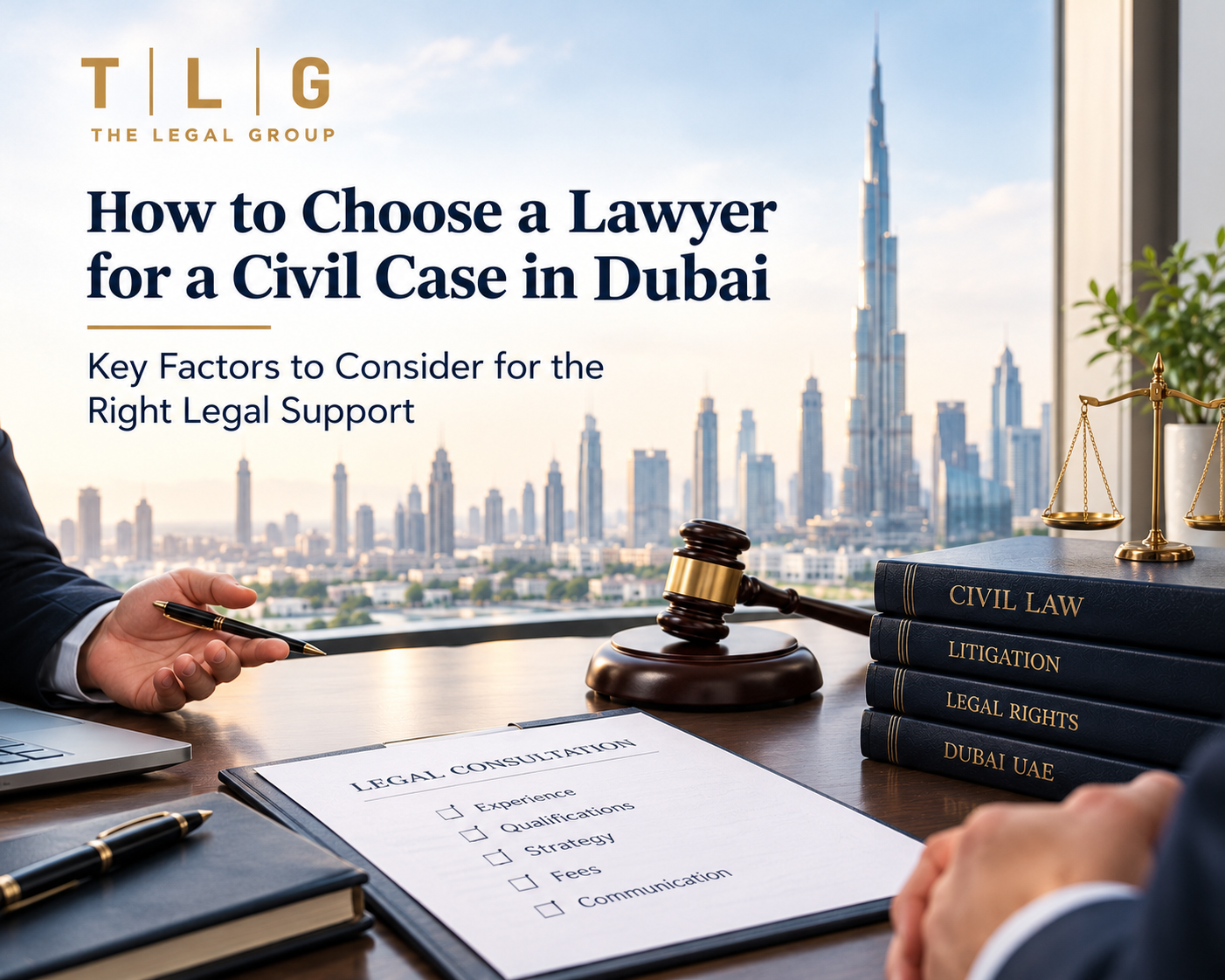
How to Choose a Lawyer for a Civil Case in Dubai
Choosing the right lawyer is an important step when dealing with a civil dispute in Dubai. Whether the matter involves a breach of contract, property dispute, unpaid dues, financial claim or compensation, the right legal guidance can help you understand your rights and the options available to resolve the issue.
Civil cases may involve detailed documentation, legal procedures and strict deadlines. Before taking legal action, it is important to find a professional who understands the nature of your dispute and can explain the possible legal routes clearly.
This guide explains how to choose a civil lawyer in Dubai and what to consider before making your decision.
Understand Your Type of Civil Case
Before choosing a lawyer, identify the main issue involved in your dispute. Different civil matters may require different legal knowledge and experience.
Common types of civil disputes in Dubai include:
- Contract disputes: Disagreements involving contractual obligations, unpaid amounts or alleged breaches of an agreement.
- Property disputes: Conflicts concerning ownership, property transactions or real estate agreements.
- Commercial disputes: Disagreements between businesses, partners or other commercial parties.
- Construction disputes: Claims involving project delays, payment disagreements or contractual responsibilities.
- Financial claims: Disputes involving outstanding payments, debts or other financial obligations.
- Compensation claims: Matters involving alleged losses or damage for which compensation may be sought.
Understanding your case helps you look for a lawyer whose experience is relevant to your specific legal needs.
Check the Lawyer’s Qualifications and Licensing
One of the first steps is to verify the lawyer’s professional qualifications and relevant licensing.
In Dubai, the distinction between a legal consultant and a lawyer authorised to appear before the courts is important. Their permitted roles may differ depending on their registration and the relevant legal requirements.
Before appointing a professional, consider checking:
- Their current professional registration and licensing.
- Whether they are authorised to undertake the work your case requires.
- The legal services offered by their firm.
- Whether their experience matches the type of dispute you are facing.
You can consult the official Dubai Legal Affairs Department directory to search for registered advocates, legal consultants and licensed firms. The directory provides registration information, but it should not be treated as an endorsement of a particular professional.
Look for Relevant Civil Litigation Experience
General legal knowledge is useful, but experience with similar disputes can also be important.
When assessing a civil litigation lawyer in Dubai, ask whether they regularly handle matters comparable to yours. For example, a property-related claim may require knowledge of real estate documents, while a contractual dispute may require detailed analysis of the agreement and evidence of the alleged breach.
Consider asking the lawyer:
- Have you handled cases involving similar legal issues?
- What documents would you need to assess my case?
- What legal options may be available?
- What challenges or risks should I understand?
- Could negotiation or mediation be appropriate before court proceedings?
A careful lawyer should explain the strengths, weaknesses and uncertainties of your case without guaranteeing a particular result.
Evaluate Communication and Transparency
Clear communication is essential throughout a legal matter. You should understand what the lawyer is advising, why a particular step may be necessary and what is expected from you.
A professional civil lawyer in Dubai should be able to explain legal concepts in understandable language and respond to reasonable questions about the case.
Before making a decision, consider whether the lawyer:
- Explains the legal process clearly.
- Gives realistic expectations about possible outcomes.
- Keeps you informed about important developments.
- Explains the documents and information required.
- Provides clarity about responsibilities and communication arrangements.
Good communication can help you make informed decisions at each stage of the dispute.
Understand the Legal Fees and Other Costs
Legal fees are another important factor when selecting a lawyer. The total cost may depend on the complexity of the dispute, the amount of documentation involved, the work required and whether court proceedings become necessary.
Before appointing a lawyer, ask for a clear explanation of the proposed fees and payment arrangements.
You should understand:
- Whether the initial consultation is chargeable.
- How professional fees are calculated.
- Which services are included in the agreed fee.
- Whether additional work may involve extra charges.
- Whether court fees, translation costs, expert fees or other expenses may apply.
Request written confirmation of the fee arrangement where appropriate. Comparing services and transparency can be more useful than choosing a lawyer based on price alone.
Ask About the Proposed Legal Strategy
A suitable lawyer should assess the facts and documents before recommending a course of action.
Depending on the dispute, the available options may include negotiation, a formal legal notice, mediation or court proceedings. The appropriate route depends on the relevant law, the agreement between the parties and the circumstances of the case.
Ask the lawyer to explain the proposed approach, the evidence needed to support your position and the potential risks of each option.
A practical civil dispute resolution strategy should consider the legal merits of the claim, the likely costs, the available evidence and your objectives. Court proceedings are not necessarily the only option in every dispute.
Review Documents and Evidence Before the Consultation
Preparing relevant documents can help a lawyer understand your case more efficiently.
Depending on the matter, useful documents may include:
- Contracts, agreements or related correspondence.
- Invoices, receipts and payment records.
- Emails, messages or formal notices.
- Property or business documents.
- Evidence of the alleged breach or financial loss.
- Previous legal communications or court documents, if any.
Keep the documents organised and explain the sequence of events accurately. Do not omit information simply because it may appear unfavourable; a complete picture helps the lawyer assess the matter properly.
Consider Availability and Case Management
Civil disputes may require ongoing communication, document preparation and responses to procedural developments.
Before appointing a lawyer, clarify who will handle your case, how updates will be provided and how urgent questions will be managed.
You should also understand the expected next steps, the information you need to supply and any known deadlines. A clear case-management process helps both sides understand their responsibilities.
Why Choose TLG for Civil Legal Matters in Dubai?
The Legal Group (TLG) provides legal services for individuals and businesses dealing with civil disputes in Dubai. Its civil law practice covers matters including contract disputes, property disputes, construction disputes, employment disputes and financial claims.
TLG’s civil legal services include assessing the circumstances of a dispute, reviewing relevant documents, advising on available options and assisting with dispute resolution or litigation where appropriate.
If you are looking for professional guidance, explore TLG’s civil lawyer services in Dubai to learn more about its practice areas.
The appropriate legal approach will depend on the facts of your case, the supporting evidence and the applicable legal requirements.
Common Mistakes to Avoid When Choosing a Lawyer
When selecting legal representation, avoid making a decision based only on advertising or promises of success.
Common mistakes include:
- Choosing a lawyer without checking relevant qualifications.
- Ignoring whether the lawyer has experience with similar disputes.
- Failing to clarify fees and additional expenses.
- Withholding important facts or documents.
- Assuming that every dispute must go to court.
- Accepting guaranteed-outcome claims without proper case assessment.
Taking time to check these factors can help you make a more informed choice.
Conclusion
Choosing a lawyer for a civil case in Dubai involves more than finding someone who offers legal services. It requires checking professional licensing, relevant experience, communication, fee transparency and the proposed approach to your dispute.
Before making a decision, organise your documents, explain your circumstances clearly and ask questions about the available legal options. A careful assessment can help you understand your position and decide on an appropriate next step.
Disclaimer: This article is for general informational purposes only and does not constitute legal advice. The appropriate legal procedures and available remedies depend on the facts of each case and the applicable law.