
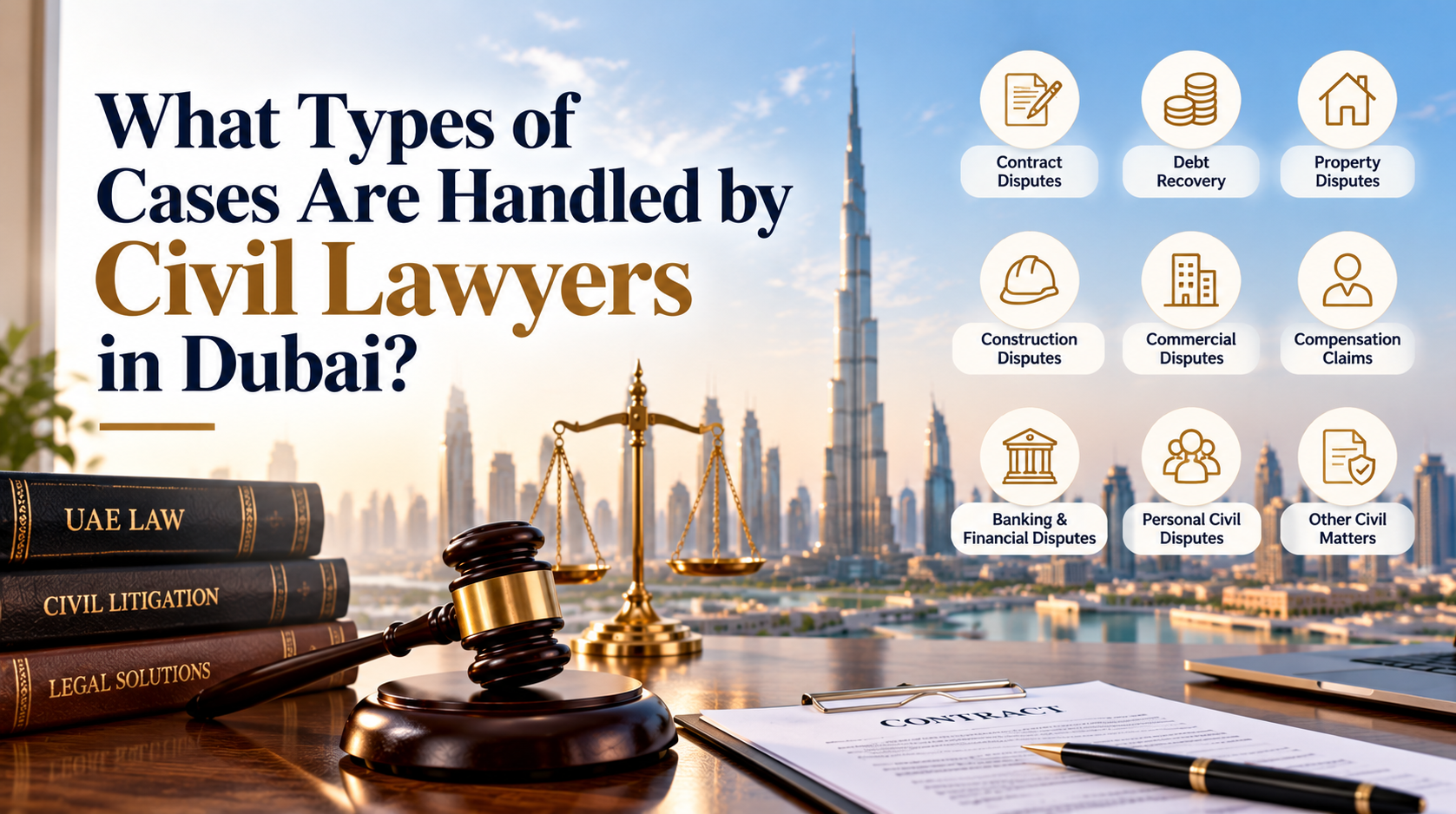
What Types of Cases Are Handled by Civil Lawyers in Dubai?
Civil disputes can arise when individuals, businesses, landlords, tenants or other parties disagree over their legal rights and obligations. These disputes may involve unpaid debts, broken contracts, property ownership, construction projects or financial losses.
A civil lawyer in Dubai helps clients understand their legal position, assess available options and resolve disputes through negotiation, settlement or court proceedings where appropriate.
If you are facing a legal dispute in Dubai, understanding the types of cases handled by civil lawyers can help you determine what legal assistance you may need.
What Does a Civil Lawyer in Dubai Do?
A civil lawyer advises and represents clients involved in non-criminal legal disputes. Their work may include reviewing contracts, preparing legal notices, assessing evidence, negotiating settlements and representing clients in civil proceedings.
The appropriate legal procedure depends on the nature of the dispute, the parties involved and the applicable UAE laws.
Civil lawyers in Dubai may assist individuals, property owners, investors, contractors and businesses with a wide range of legal matters.
Contract Disputes
Contract disputes arise when one party believes another has failed to fulfil an agreement or has breached its contractual obligations.
These disputes can involve individuals, businesses, suppliers, service providers, contractors and other parties.
Common examples include:
- Failure to deliver goods or services as agreed.
- Disagreements over payment terms.
- Breach of business or service agreements.
- Disputes over contractual deadlines.
- Disagreements about termination clauses.
A civil lawyer can review the agreement, assess the available evidence and explain the legal remedies that may be available.
Depending on the circumstances, the dispute may be resolved through negotiation or may require court proceedings.
Debt Recovery and Unpaid Invoices
Unpaid debts are a common concern for businesses and individuals. A dispute may arise when a borrower fails to repay a loan, a customer does not settle an invoice or a business partner fails to meet a payment obligation.
Debt recovery matters may involve:
- Outstanding commercial invoices.
- Unpaid payments under a contract.
- Disputes involving loans or financial obligations.
- Unpaid amounts owed by business customers.
- Claims relating to outstanding contractual payments.
A civil lawyer can review invoices, payment records, contracts and communications to assess the claim.
Depending on the circumstances, the lawyer may recommend sending a formal demand, negotiating a settlement or pursuing the appropriate legal procedure to recover the amount owed.
The availability of a claim and the appropriate enforcement procedure depend on the supporting documents and applicable law.
Property and Real Estate Disputes
Property disputes can involve buyers, sellers, landlords, tenants, developers and property investors.
These disputes may concern ownership rights, contractual obligations, payments or the use of a property.
Examples include:
- Disagreements over property sale agreements.
- Disputes involving property ownership.
- Failure to fulfil obligations under a real estate contract.
- Disputes over property payments or deposits.
- Conflicts involving property handover obligations.
Some rental disputes fall under specialised procedures, including those handled by Dubai’s Rental Disputes Centre, depending on the matter.
A civil lawyer can help identify the appropriate forum, review the relevant documents and explain the legal options available.
Construction Disputes
Construction projects often involve several parties, including developers, contractors, subcontractors, consultants and suppliers. Disputes can arise when the parties disagree over payment, project timelines, workmanship or contractual responsibilities.
Common construction disputes include:
- Delayed project completion.
- Unpaid contractor or subcontractor invoices.
- Disagreements over variations to the original contract.
- Defective or incomplete construction work.
- Claims relating to contractual obligations and project delays.
Resolving a construction dispute may require contracts, payment certificates, project correspondence, inspection reports and other technical evidence.
A civil lawyer can assess the contractual position, explain potential claims and assist with negotiation or litigation where appropriate.
Commercial and Business Disputes
Businesses may face legal disagreements with customers, suppliers, service providers, partners or other companies.
Commercial disputes often involve financial losses, contractual obligations or disagreements over business arrangements.
Examples include:
- Disputes between business partners.
- Breach of commercial agreements.
- Unpaid supplier invoices.
- Disagreements over business transactions.
- Claims arising from failure to meet contractual obligations.
Depending on the circumstances, a commercial dispute may be handled through negotiation, mediation, arbitration or court proceedings.
A lawyer can review the relevant agreements and supporting evidence to help a business understand its legal position and consider the available resolution options.
Compensation and Civil Liability Claims
A person or business may consider a civil claim when they believe another party’s actions or failure to fulfil a legal obligation have caused a loss.
Depending on the facts and applicable law, claims may relate to contractual losses, financial harm or other legally recognised damage.
Evidence may include contracts, invoices, correspondence, expert reports and records showing the nature of the loss.
A civil lawyer can assess whether the facts support a potential claim, explain the applicable requirements and advise on the evidence needed.
Compensation is not automatic. The legal basis for the claim, proof of loss, causation and other applicable requirements must be considered.
Banking and Financial Disputes
Banking and financial disputes may arise between customers, financial institutions, borrowers, lenders or other parties involved in financial transactions.
Examples may include:
- Disagreements over financial agreements.
- Disputes concerning repayment obligations.
- Claims involving contractual financial commitments.
- Disagreements over account-related or lending arrangements.
- Disputes concerning guarantees or other financial obligations.
The appropriate procedure depends on the nature of the dispute and the relevant contractual and regulatory framework.
A civil lawyer can review the financial documents, identify the issues in dispute and explain the available legal options.
Personal Civil Disputes
Civil disputes can also arise between individuals outside a commercial or property context.
Depending on the circumstances, these may involve agreements, unpaid personal debts, financial obligations or other disputes over legal rights.
A lawyer can help determine whether the matter gives rise to a civil claim, what evidence may be required and which legal procedure is appropriate.
Not every disagreement necessarily warrants court action. In some cases, direct negotiation or a formal settlement may be a practical option.
How Are Civil Disputes Resolved in Dubai?
The process depends on the type of dispute, the amount claimed, the parties involved and the applicable legal procedure.
Common approaches include:
Negotiation: The parties attempt to reach an agreement directly or through their legal representatives.
Settlement: The parties agree on terms to resolve the dispute, where legally appropriate.
Mediation or other dispute resolution: Depending on the case and applicable requirements, the parties may explore an alternative dispute resolution process.
Court proceedings: If the dispute cannot be resolved by agreement, a party may bring a claim before the competent court, subject to the relevant jurisdiction and procedural requirements.
Enforcement: If a judgment or enforceable instrument is obtained, further procedures may be necessary to enforce the outcome.
A civil lawyer can explain which options are available and help you understand the steps involved in your particular case.
What Documents Should You Prepare for a Civil Lawyer?
The documents required depend on the nature of the dispute. You may need to prepare:
- Relevant contracts and agreements.
- Invoices, receipts and payment records.
- Emails and written communications.
- Legal notices and previous correspondence.
- Property or construction documents, where relevant.
- Evidence of financial losses.
- Existing court judgments or orders, if applicable.
Organising the relevant documents before a consultation can help the lawyer understand the dispute and assess the available options more efficiently.
When Should You Contact a Civil Lawyer in Dubai?
Consider seeking legal advice when a dispute involves significant financial obligations, a potential breach of contract, unpaid debts, property rights or a claim that may require formal legal action.
You should also seek advice if you have received a legal notice, face a court claim or need to understand a judgment or enforcement procedure.
Legal deadlines and procedural requirements may apply. Obtaining advice promptly can help you understand your position before deciding how to proceed.
How Can The Legal Group Help?
The Legal Group (TLG) provides legal services in Dubai, including assistance with civil law matters.
Whether you are dealing with a contractual disagreement, an unpaid debt, a property dispute or a commercial claim, TLG can discuss your circumstances and explain the legal services that may be relevant to your case.
For more information, visit the TLG Civil Lawyer in Dubai page or contact the firm to enquire about legal assistance.
Frequently Asked Questions
What types of cases are handled by civil lawyers in Dubai?
Civil lawyers may handle contract disputes, debt recovery, property disputes, construction claims, commercial disagreements, financial disputes and other non-criminal legal matters, depending on their practice and the applicable legal procedure.
Can a civil lawyer help recover unpaid money in Dubai?
A civil lawyer can review the supporting documents, assess the potential claim and explain the available recovery procedures. The appropriate approach depends on the circumstances and applicable law.
Can civil disputes be settled without going to court?
Some disputes can be resolved through negotiation, settlement or an appropriate alternative dispute resolution process. However, certain matters may require court proceedings or formal approval.
How long does a civil case take in Dubai?
The duration varies according to the complexity of the dispute, the evidence required, procedural requirements, court scheduling and whether the parties reach a settlement.
How do I choose a civil lawyer in Dubai?
Consider the lawyer’s experience with similar disputes, understanding of the relevant legal procedures, communication style, fee structure and ability to explain your options clearly.
Conclusion
Civil lawyers in Dubai assist individuals and businesses with a broad range of legal disputes, from unpaid debts and contractual disagreements to property, construction and commercial claims.
Understanding the nature of your dispute and obtaining appropriate legal advice can help you identify the available options and determine the next steps.
If you need assistance with a civil dispute, contact The Legal Group to discuss your circumstances and enquire about the legal services available in Dubai.
Disclaimer: This article is for general informational purposes only and does not constitute legal advice. The applicable law, jurisdiction and procedures depend on the circumstances of each case. Consult a qualified UAE legal professional for advice specific to your situation.