
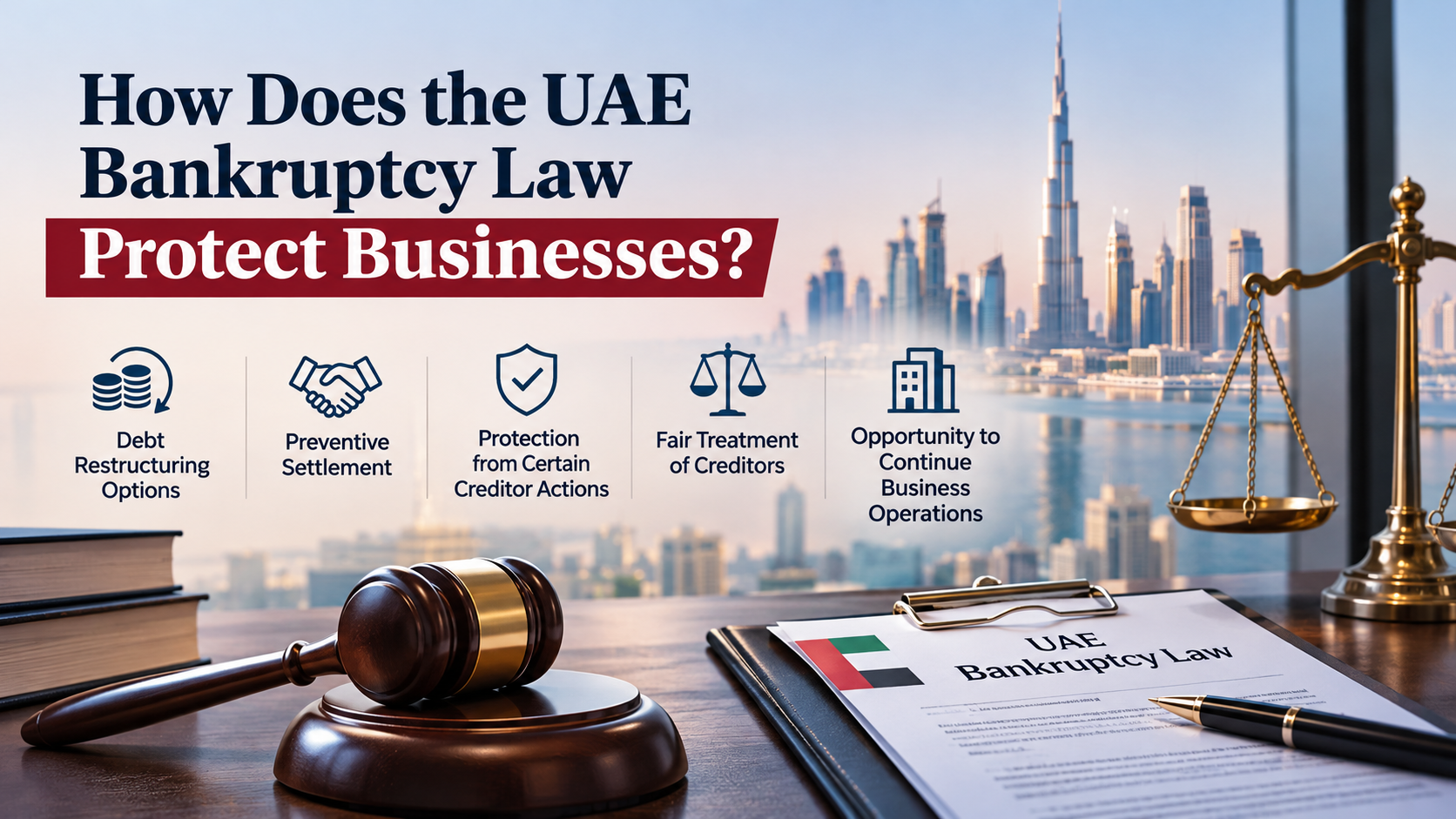
How Does the UAE Bankruptcy Law Protect Businesses?
The UAE offers a strong legal framework to support businesses facing financial difficulties. However, even well-established companies can experience unexpected challenges, including cash flow problems, unpaid debts, declining revenue, and difficulties meeting financial obligations.
When a company starts experiencing financial problems, business owners may worry about creditor claims, legal disputes, and the possibility of closing their business.
To address these situations, the UAE has introduced bankruptcy legislation that provides legal options for financially distressed businesses. These options can help companies manage their debts, explore restructuring opportunities, and, where possible, continue their business operations.
Understanding how UAE bankruptcy law protects businesses can help company owners make informed decisions and avoid unnecessary legal complications.
Understanding UAE Bankruptcy Law
The UAE bankruptcy framework establishes legal procedures for companies that are unable to meet their financial obligations.
Federal Decree-Law No. 51 of 2023 on Financial Restructuring and Bankruptcy provides the current federal framework for financial restructuring and bankruptcy matters. It replaced the previous bankruptcy legislation and introduced updated procedures for dealing with financially distressed businesses.
The main purpose of this legislation is to provide an organised approach to financial difficulties while considering the interests of both businesses and creditors.
How Does UAE Bankruptcy Law Protect Businesses?
The UAE bankruptcy framework provides several legal mechanisms that can help eligible businesses manage financial difficulties.
Opportunity to Restructure Business Debts
One of the important protections available under UAE bankruptcy law is the opportunity to restructure business debts.
A company experiencing financial difficulties may be able to negotiate with creditors and develop a repayment plan based on its financial position.
Instead of immediately closing the business, restructuring may allow the company to reorganise its financial obligations and work towards recovery.
Protection Through Preventive Settlement
Preventive settlement is a legal procedure designed to help eligible businesses address financial difficulties before their situation becomes more serious.
It provides an opportunity to reach an agreement with creditors and establish a suitable arrangement for managing outstanding debts.
This procedure may help businesses avoid liquidation when a realistic financial recovery plan is possible.
Protection Against Certain Creditor Actions
Bankruptcy proceedings can provide protection against certain creditor recovery actions.
Depending on the procedure and court orders, a temporary suspension of claims may give a business time to prepare a restructuring proposal and address its financial obligations.
This can reduce immediate pressure from individual creditor actions while the legal process is underway.
Fair Treatment of Creditors
UAE bankruptcy law also protects the legal interests of creditors.
It establishes procedures for submitting, reviewing, and dealing with creditor claims. This helps ensure that financial obligations are handled through a structured legal process.
The law also considers the applicable priorities when distributing company assets during liquidation.
Opportunity to Continue Business Operations
Financial difficulties do not always mean that a company must shut down permanently.
If the business remains financially viable, restructuring procedures may provide an opportunity to continue operations while addressing outstanding liabilities.
This can help preserve business relationships, employees’ jobs, customer confidence, and the overall value of the company.
What Happens If a Business Cannot Recover Financially?
Not every financially distressed business can successfully restructure its debts.
If the company cannot recover or meet the requirements for a restructuring arrangement, bankruptcy proceedings may result in liquidation.
During liquidation, company assets are dealt with under the applicable legal procedures, and the proceeds are distributed among creditors according to their legal priorities.
This provides an organised way to handle outstanding financial obligations and bring the company’s financial affairs to a legal conclusion.
Are Company Directors Personally Responsible for Business Debts in the UAE?
Company directors are not automatically personally responsible for every debt incurred by their company.
However, personal liability may arise in certain circumstances, depending on the company’s legal structure, applicable legislation, personal guarantees, and the conduct of directors.
For example, directors may face legal consequences if they engage in fraudulent activities, misuse company assets, or breach their legal responsibilities.
Business owners and directors should seek legal advice when their company starts experiencing serious financial difficulties.
When Should a Business Consult a Bankruptcy Lawyer in Dubai?
Businesses should consider seeking legal advice as soon as they identify serious financial problems.
Waiting until creditors begin taking legal action can make the situation more difficult to manage.
A corporate restructuring and insolvency lawyer can help businesses understand their legal position, review available options, communicate with creditors, and prepare the necessary legal documents.
Early legal guidance can help business owners make better decisions and understand whether restructuring or another bankruptcy procedure may be appropriate.
How Can The Legal Group Help With Corporate Restructuring and Insolvency?
Dealing with financial difficulties can be challenging for business owners, particularly when they have multiple creditors and ongoing financial commitments.
The Legal Group (TLG) provides legal assistance in corporate restructuring and insolvency matters in Dubai.
Businesses can seek legal guidance on restructuring options, bankruptcy procedures, creditor disputes, financial obligations, and related legal matters.
Getting professional legal support can help companies understand the available solutions and take appropriate steps to manage their financial difficulties.
Conclusion
UAE bankruptcy law provides businesses with a legal framework to manage financial difficulties, negotiate with creditors, and explore restructuring opportunities. It also establishes procedures for situations where a company cannot recover financially.
For business owners, understanding these legal options is important before financial problems become more complicated.
If your business is facing financial difficulties, consult The Legal Group (TLG) to understand your legal options for corporate restructuring and insolvency in Dubai.