
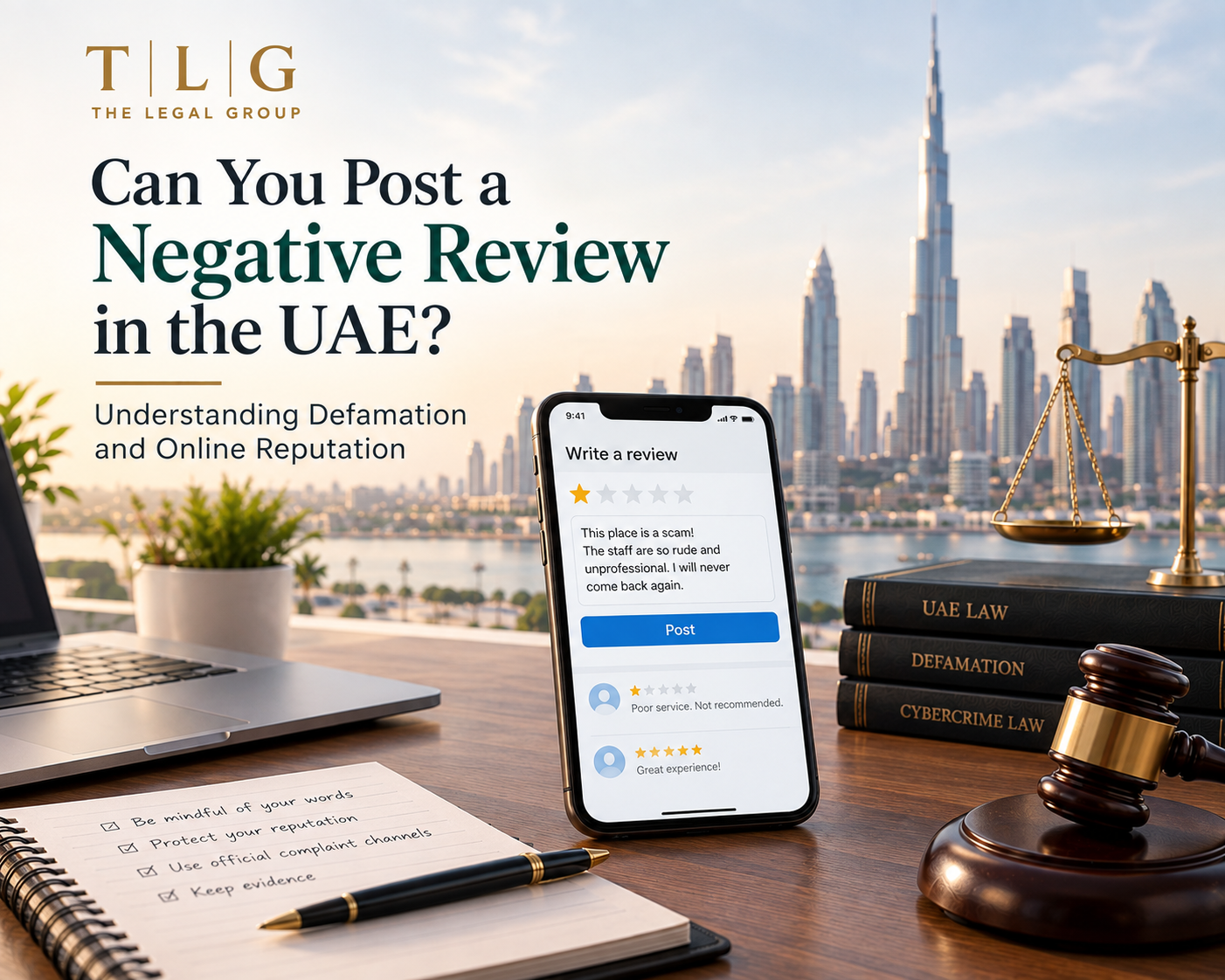
Can You Post a Negative Review in the UAE? Understanding Defamation and Online Reputation
Online reviews have become an important way for customers to share their experiences with restaurants, businesses and service providers. However, in the UAE, the wording and context of a public review can have legal consequences when it goes beyond criticism and potentially harms another person’s or business’s reputation.
Understanding the difference between genuine criticism, allegations and defamatory statements can help individuals make more informed decisions before publishing content online.
Defamation and Insult Under UAE Law
UAE law provides protection against certain forms of defamatory, insulting or reputation-damaging statements.
The assessment may depend on several factors, including:
- The wording used;
- The context of the statement;
- The method of publication;
- The person or establishment targeted; and
- The potential effect on reputation.
Slander or insult may also become relevant where statements affect another person’s honour or dignity, even where a specific incident has not been attributed.
Online Defamation and Social Media Reviews
The legal position can become more significant when statements are published online. UAE cybercrime legislation addresses certain forms of online insults, defamatory statements and conduct that may harm another person’s reputation.
This means that posting a review online requires careful consideration of both the wording and the circumstances in which the statement is made.
Online Reviews, Opinion and Reputation
There is no single formula that determines when a review becomes defamatory. The overall wording, context and potential effect of the publication may be relevant.
For example, saying “I did not enjoy the food” generally communicates a personal experience or opinion. A statement such as “This restaurant is a scam” or “The staff are thieves” makes a much more serious allegation and may suggest fraud, theft or other improper conduct.
Legal risk may increase where a review contains allegations involving:
- Fraud or scams;
- Theft or cheating;
- Criminal conduct;
- Professional misconduct; or
- Unsafe practices.
Words such as “scam,” “fraud,” “thief,” “cheat,” “criminal” or “corrupt” can therefore create potential legal exposure depending on the circumstances, context and effect of the publication.
Photos, Videos and Privacy Concerns
A review may involve more than written comments. Photos or videos showing employees, customers or private individuals can raise additional legal considerations.
UAE cybercrime and privacy laws may become relevant where online platforms or technology are used in circumstances involving an invasion of another person’s privacy, including the publication of photos, images, comments, data or information relating to that person.
Therefore, individuals should consider carefully whether photographs or videos included with a public review contain identifiable people or private information.
Appropriate Complaint Channels and Evidence
When a person has a genuine complaint about a restaurant, business or service provider, using an appropriate formal complaint channel may be preferable to publishing serious accusations online.
Depending on the circumstances, possible channels may include:
- Filing a police complaint where there is a genuine criminal issue;
- Submitting a complaint to the relevant consumer protection authority;
- Filing a complaint with the municipality or food safety authority;
- Starting a civil claim where legally recognised loss or damage has occurred; or
- Sending a formal written complaint to the business before taking further action.
Evidence That May Support a Complaint
The type of evidence required will depend on the circumstances. It may include:
- Hospital, medical or laboratory reports, particularly for alleged food poisoning, illness or physical injury;
- The date, time and location of the incident;
- The specific branch or location of the business;
- Receipts, invoices, order confirmations and payment records;
- Delivery application records;
- Emails, WhatsApp messages, SMS messages and other communications;
- Complaint reference numbers;
- Photographs or videos relevant to the complaint;
- Witness details or statements, where available;
- Previous complaints submitted to the business and responses received;
- Proof of financial loss;
- Screenshots of relevant communications or online transactions;
- Booking confirmations and product or service descriptions;
- Relevant terms and conditions, warranties, menus or advertisements;
- The name of the staff member or manager involved, where known; and
- Official reports or reference numbers issued by relevant authorities.
Keeping original evidence can be important if a dispute later develops.
Can You Post a Negative Review in the UAE?
A person may share their experience, but the wording and potential effect of the review matter.
The legal risk may arise when a review contains insults, serious allegations or statements that could harm the reputation of an individual, company or establishment.
Even when a customer believes an incident genuinely occurred, it is important to distinguish between describing an experience and making an allegation of criminal or dishonest conduct.
For example, describing an actual problem with food or service is different from publicly accusing a business or employee of criminal behaviour.
Where the complaint is genuine, preserving supporting evidence and using the appropriate formal complaint channel may be a more suitable approach than publishing serious accusations online.
Can a Business Take Legal Action Over a Bad Review?
Depending on the circumstances, a business or individual may consider legal action where an online review contains statements capable of damaging reputation or otherwise falling within applicable legal provisions.
This may be particularly relevant where the publication is public, contains serious allegations, or uses insulting language.
Whether legal liability arises will depend on the specific facts, wording, context and applicable law.
Is Deleting a Review Enough to Avoid Liability?
Deleting a review stops its continued publication from the account, but it does not necessarily eliminate potential legal consequences for content that has already been published.
Online material may have been:
- Screenshotted;
- Saved;
- Shared;
- Reposted; or
- Otherwise preserved as evidence.
For this reason, individuals should consider the potential consequences before publishing allegations online rather than assuming that deleting the content will resolve the issue.
How to Handle a Genuine Complaint
If you have experienced a genuine problem with a restaurant, company or service provider, consider keeping a clear record of what happened.
A practical approach may include:
- Keep receipts, invoices and payment records.
- Preserve relevant photographs or videos.
- Keep communications with the business.
- Record the date, time and location of the incident.
- Keep medical or official reports where applicable.
- Contact the business through an appropriate formal channel.
- Consider the relevant consumer, municipal or regulatory complaint process.
- Seek legal guidance where the matter involves significant loss, injury, allegations of criminal conduct or a potential legal dispute.
Frequently Asked Questions
Can I post a negative review in the UAE?
A person may share their experience, but the wording and context of the publication are important. Statements involving insults, allegations of fraud, theft, criminal conduct or other serious accusations can create potential legal concerns.
Can a business file a case over a bad review?
Depending on the circumstances, a business or affected individual may consider legal action where the review potentially falls within applicable laws concerning reputation, insult, privacy or online conduct.
Does calling something an “opinion” remove legal risk?
Not necessarily. Describing a statement as an opinion does not automatically remove legal concerns if the wording, context and effect of the publication potentially engage applicable legal provisions.
Should I use a formal complaint instead of posting accusations online?
Where there is a genuine complaint, preserving evidence and using an appropriate formal complaint channel can help ensure that the matter is presented to the relevant authority with supporting documentation.
Conclusion
UAE law distinguishes between legitimate criticism and potentially unlawful publication. A review being negative does not by itself determine whether legal liability exists. The wording, context, method of publication and potential impact on another person’s or business’s reputation can all be relevant.
Online publications may also raise additional considerations under UAE cybercrime and privacy laws, particularly where statements involve insults, serious allegations or privacy concerns.
If you have a genuine complaint, preserving evidence and using an appropriate formal channel can provide a structured way to raise the issue without unnecessarily exposing yourself to the risks that may arise from publishing serious allegations online.
Disclaimer: This article is provided for general informational purposes only and does not constitute legal advice. UAE laws and their application may depend on the specific facts and circumstances of each matter. Professional legal advice should be obtained for case-specific concerns.